
Catholic Prayer for Veterans — Healing, Honor & Homecoming
Service changes a person in ways that don't disappear when the uniform comes off. The Church has prayers for the transition, for PTSD, for those who didn't come home, and for the families who carry all of it.

Catholic prayer for veterans — what the Church has always offered
From the battlefield to the long years afterThe Catholic prayer for veterans is not the same prayer as the prayer for soldiers. The soldier's prayer asks for protection in the field. The veteran's prayer asks for something harder: the ability to come home — not only to an address, but to oneself. Service changes a person in ways that do not end at discharge. The Church has always known this, and the Catholic tradition has specific prayers, specific saints, and specific theology for the long work of healing, honor, and homecoming that follows combat.
St. Ignatius of Loyola is the patron saint veterans most need and least know about. He was a Spanish soldier whose leg was shattered by a cannonball at the Battle of Pamplona in 1521 — his military career ended in a moment, his identity collapsed with it. During the months of forced recovery that followed, unable to do anything except read, he encountered Christ. He hung his sword at the altar of Our Lady of Montserrat and found that the discipline, courage, and capacity for sacrifice formed in military service were not wasted — they were the raw material of a new vocation. He founded the Jesuits and became one of the most influential figures in Church history. His story is the veteran's story: the career-ending wound, the identity crisis, the long recovery, the discovery that what was formed in service could be offered in a new way.
For veterans struggling with PTSD, moral injury, or the anxiety of transition, St. Dymphna — patron of mental health — intercedes alongside St. Ignatius. The Church explicitly supports professional mental health care as part of the virtue of temperance (CCC 2288). Many veterans find that a St. Michael medal necklace kept close is a daily physical reminder that the intercession which accompanied them through service continues now.
St. Michael medal necklaces & Catholic gifts for veterans
Each saint below has a specific connection to what veterans carry. Every medal is handcrafted in the USA by Bliss Manufacturing — sized for a dog tag chain, a pocket, or worn as a necklace.
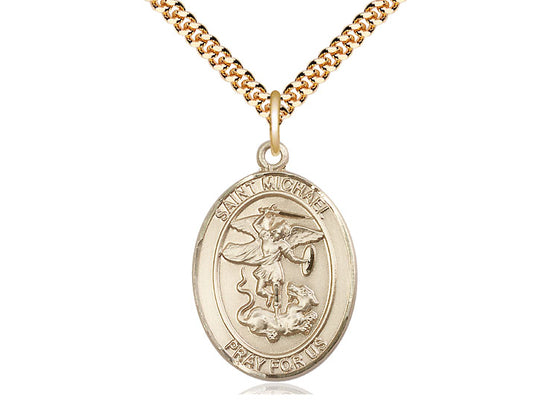
The most traditional Catholic veteran gift. St. Michael is the patron of all who have served — his intercession doesn't end at discharge. Many veterans wear his medal necklace after service as a reminder that the protection that accompanied them through the field is still present. The right gift for retirement, discharge, and service anniversaries.
Shop St. Michael Medal Necklaces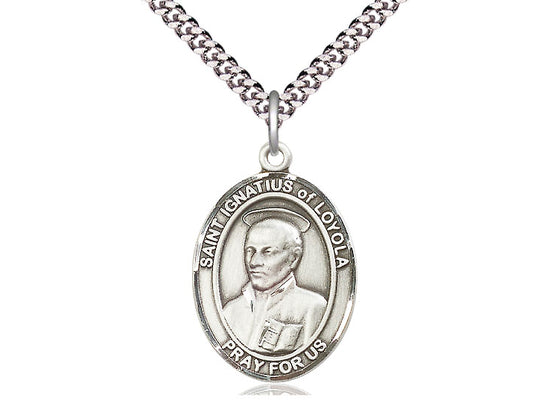
A Spanish soldier whose military career ended with a cannonball wound in 1521. During months of forced recovery he found a new calling and founded the Jesuits. His medal is the most meaningful Catholic veteran gift for someone navigating the transition from military identity to civilian life — the saint who understands the wound that ends one chapter and forces another.
Shop St. Ignatius Medals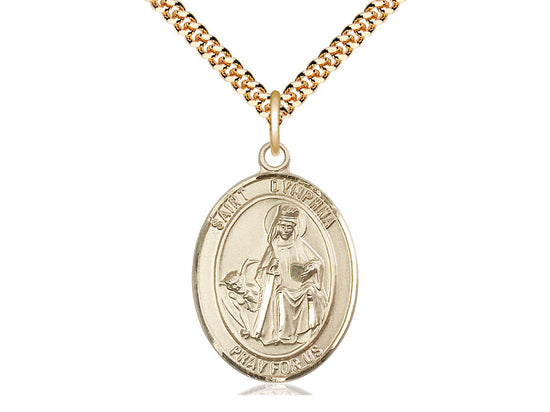
The patron saint of mental health and PTSD — the condition no person should carry alone. St. Dymphna's medal is the most specific Catholic veteran gift for someone struggling with what they saw or did in service. Many veterans and their families keep her medal close during the long work of recovery. Her feast, May 15, falls during Mental Health Awareness Month.
Shop St. Dymphna Medals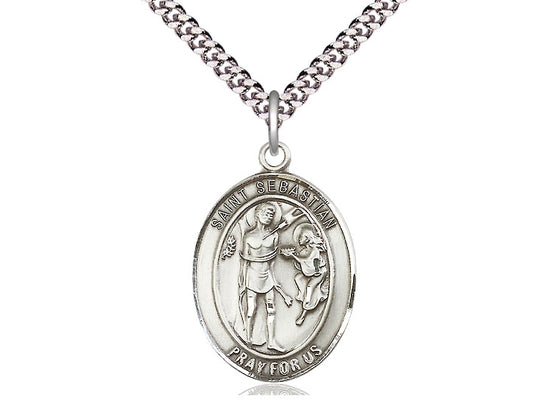
A Roman soldier who survived martyrdom — shot with arrows, nursed back to health, and returned to his mission. His medal honors the veteran who endured what most people cannot imagine and kept going. A meaningful gift for veterans with physical injuries from service, or those in the long work of rehabilitation and recovery.
Shop St. Sebastian Medals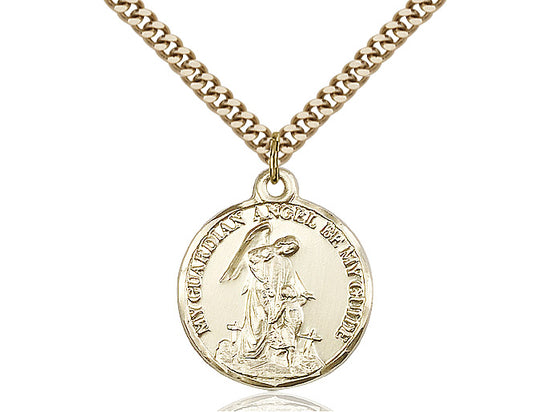
The Guardian Angel was present with the veteran through everything they faced in service. The medal is a reminder that this accompaniment doesn't end at discharge — the same personal intercession that traveled with them through the field travels with them now. Meaningful for veterans of any age, at any stage of the transition home.
Shop Guardian Angel Medals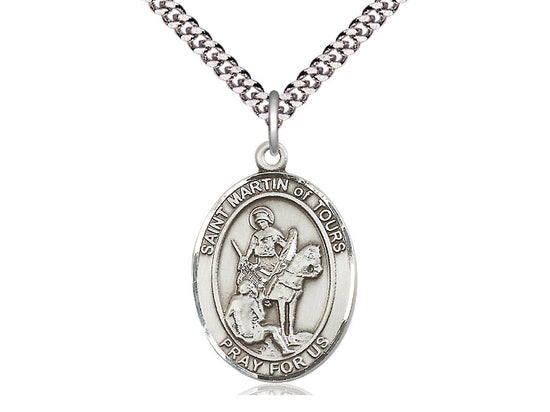
A Roman soldier who chose conscience over military duty, was imprisoned, discharged, and became a bishop who shaped the Church of France. His medal is the right gift for the veteran figuring out what comes after the uniform — the saint whose transition from soldier to new vocation is the template for every veteran finding what comes next.
Shop St. Martin MedalsA prayer for veterans — for healing, honor, and what they carry home
For the veteran, the family, and Memorial Day & Veterans Day observancesThis prayer for veterans addresses three groups who search for it: the veteran themselves, who may need a prayer for the transition, the PTSD, or simply the weight of what they saw and did; the families and communities who want to honor the veteran and don't know quite how to pray for what they carry; and the church communities who pray for veterans on Memorial Day and Veterans Day and want a prayer specific to what veterans actually experience.
The prayer does not minimize what service cost. It names what veterans carry — the things they cannot un-see, the distance between who they were and who they became — and places it before God through three saints specific to the veteran's experience: St. Michael, who accompanied them through service; St. Ignatius, who found a new life after a career-ending wound; and a prayer for the fallen, by name.
This prayer may be used at Veterans Day or Memorial Day services, by a family member honoring a veteran, or by the veteran themselves as a morning prayer. Many families frame it alongside a St. Michael medal necklace given as a veteran's gift — a physical companion to the words.
the years of their lives,
the things they cannot un-see,
the distance between who they were
and who they became in service.
St. Michael, who went before them
into the field —
stand with them now that the field is behind them.
St. Ignatius, who lay wounded on a battlefield
and found a new calling in the long months of recovery —
walk with those finding out
who they are now that the uniform is off.
For the fallen:
may perpetual light shine upon them.
For the living:
may they find their way home —
not only to an address,
but to themselves.
Amen.
Catholic prayer for veterans with PTSD and moral injury
What the tradition offers when the wound is interiorPTSD and moral injury are not the same thing, though they often arrive together. PTSD is what happens when the nervous system cannot process an experience — the body stays at war after the war is over. Moral injury is the wound that comes from participating in, witnessing, or failing to prevent something that violated a person's deepest convictions. Both are real. Both are serious. The Catholic tradition addresses both — though it does not always use those words.
St. Dymphna, patron of mental health and PTSD, intercedes for the nervous system that will not rest after service — the hypervigilance, the interrupted sleep, the intrusive memories that follow veterans home from the field. Her story resonates with veterans who find that people at home cannot quite grasp what they carry. Her medal is widely given to veterans struggling with the psychological aftermath of service, and her novena — nine days of prayer beginning May 6, during Mental Health Awareness Month — is more appropriate for the long condition of PTSD than a single prayer.
For moral injury specifically — the wound of conscience, the question of what was done and whether it could have been different — the sacrament of Confession is the Church's direct response. Not as a transaction, but as the formal act of bringing what cannot be carried alone before the mercy of God. Many veterans find that Confession, undertaken with a confessor who understands military service, is the most specifically healing thing the Church offers. St. Ignatius of Loyola — himself a soldier who had to reckon with a life of violence before his conversion — intercedes for this moral reckoning. The Church explicitly supports professional mental health treatment alongside prayer (CCC 2288): taking medication or working with a therapist for PTSD is not a failure of faith.
Who are you praying for?
Find the right prayer, saint, and medal for your situationThe prayer for veterans takes different forms. Memorial Day is different from a veteran's daily struggle with PTSD. Choose what you are facing — we'll show you the right saint, prayer, and medal.
Catholic prayers for veterans — the full guide
Full text in English & Spanish on each prayer pageThe general prayer for veterans is the right prayer for Memorial Day services, Veterans Day observances, and the daily intercession of families with veterans in their lives. It does not ask for anything specific — it names what veterans carry and places it before God through the saints who specifically understand military service. It is appropriate for use in Catholic parishes, school ceremonies, family prayers, and personal devotion. The prayer above on this page — the Catholic prayer for veterans — can be used exactly this way.
The St. Michael Prayer is as appropriate for veterans as for active soldiers. Many veterans continue to pray it daily after discharge — not because they are still in the field but because the intercession of the archangel accompanies a military identity that does not disappear when the uniform comes off. Veterans who carry a St. Michael medal necklace into civilian life often describe it as a continuity of the prayer they prayed in service — the same patron, the same intercession, in a new context.
St. Dymphna intercedes for the nervous system that won't stand down — the hypervigilance, the interrupted sleep, the intrusive memories that followed the veteran home from the field. St. Ignatius intercedes for the identity crisis and moral reckoning that often accompanies PTSD: the person who came home is not the same person who left. A St. Dymphna medal is the most specific Catholic veteran gift for PTSD — her patronage is for exactly this.
The Suscipe — "Take, Lord, and receive all my liberty…" — is the prayer of a former soldier. St. Ignatius wrote it after hanging his sword at Our Lady's altar and spending months in spiritual reconstruction. For veterans it is the prayer of release: letting go of an identity that was real and good and costly, and entrusting what was built in service to God to use differently. The things formed in military service — discipline, courage, the capacity to endure, the habit of sacrifice — are offered back to God for whatever comes next. Many veterans find it the most honest prayer they have prayed.
The Catholic prayer for fallen veterans is rooted in the doctrine of the communion of saints — the teaching that the living and the dead remain connected through prayer, and that Mass offered for the dead draws the grace of Christ's sacrifice to the specific soul being remembered. On Memorial Day, many Catholic communities hold Mass specifically for fallen veterans. For veterans who lost comrades in service, the Eternal Rest prayer and a Mass intention are the two most direct acts of intercession the Church offers. The prayer for fallen veterans is a theological act of trust: that what was given in service was received, and that death in service of others reflects the self-giving sacrifice of Christ.
The families of veterans carry their own weight — the relief of homecoming alongside the reality that the person who returned is not entirely the same person who left. Spouses and children of veterans with PTSD live inside the veteran's condition in a specific way. The prayer for veteran families asks through Our Lady — who received her Son back knowing that the wounds of the cross were permanent, that resurrection did not erase what had been suffered — for the grace to love a changed person well and to carry what cannot be fully understood.
How to pray for a veteran — a guide for families and communities
From daily prayer to Memorial Day and Veterans Day observancesMemorial Day and Veterans Day are the moments when most people think to pray for veterans. But the prayer for veterans is more effective when it is consistent throughout the year — when the veteran in your life knows that someone is praying for them not only on national observance days but on the ordinary Tuesday when the PTSD is loudest or the transition feels most impossible. Choose a specific day each week and hold it. The prayer doesn't need to be long — the blessing above on this page takes two minutes.
The most powerful thing a Catholic family or parish can do on Memorial Day is request a Mass specifically for fallen veterans. Contact any Catholic parish to arrange a Mass intention — a small customary stipend and a name or intention. A Mass offered for fallen veterans is the Church's highest form of intercession for the dead: the re-presentation of Christ's sacrifice applied to a specific soul. Many parishes offer a Memorial Day Mass; ask your pastor whether specific names can be included.
A Mass intention can be requested by anyone for any fallen veteran — you do not need to have known them personally. "All veterans who gave their lives in service" is an appropriate intention.
The best Catholic gifts for veterans are specific. A St. Michael medal necklace names the patron who accompanied them through service. A St. Dymphna medal names the patron of what they carry psychologically — without having to say it directly, which many veterans prefer. A St. Ignatius medal names the saint of the transition. These are not decorative — they are intercessory statements: a way of saying "I know what you carried, and I have asked this saint to accompany you in it."
A novena to St. Dymphna — nine days of structured prayer — is more appropriate for PTSD than a single prayer, because PTSD is a long condition, not an acute one. St. Dymphna's feast is May 15, during Mental Health Awareness Month. Beginning the novena on May 6 connects the veteran's situation to the Church's universal prayer for mental health in May. The Church explicitly supports professional mental health treatment alongside prayer — encouraging a veteran to seek professional care is not a lack of faith, it is prudence.
Veterans Day prayer in a Catholic setting is most meaningful when specific rather than generic. A prayer that names what service involved — the years given, the things seen, the identity formed and sometimes shattered, the comrades who didn't come home — resonates more with veterans than a repeated "thank you for your service" in prayer form. The prayer for veterans above on this page is written for public use at Veterans Day Masses, school ceremonies, and parish observances. It is available to print, frame, or read aloud — and many parishes find it more meaningful to veterans than standard formulaic prayers.
Patron saints of veterans — 2026 guide
The saints who specifically intercede for what veterans carryFAQ — Catholic prayer for veterans, Memorial Day & Veterans Day
St. Michael the Archangel is the primary patron saint of veterans — his patronage doesn't end at discharge. He is the archangel who goes before those who serve, and the Church has always understood his intercession as accompanying the veteran as readily as the active soldier. His medal necklace is the most traditional Catholic veteran gift, worn after service as a continuity of the prayer carried through it.
St. Ignatius of Loyola is the patron most specific to the veteran's transition — a Spanish soldier whose military career ended with a cannonball wound in 1521, who found a new calling during months of forced recovery. St. Dymphna is the patron of veterans with PTSD and the psychological aftermath of service. St. Martin of Tours — a Roman soldier who chose conscience over military duty and became a bishop — is the patron of veterans figuring out what vocation comes next. Medals for each are in the patron saint medals collection.
The Catholic Memorial Day prayer for veterans has two forms: the public prayer for a church or school setting, and the private intercession for a specific fallen veteran. For public use, the prayer above on this page — "Lord, receive what these men and women gave…" — names what veterans carried, honors the fallen, and ends with a prayer for those who came home. It is available to print and read aloud.
For private intercession, the most powerful Memorial Day prayer is a Mass intention requested at a local parish — asking a priest to offer Mass for the soul of a fallen veteran. Many parishes offer a Memorial Day Mass; ask your pastor whether specific names can be included. The Eternal Rest prayer — "Eternal rest grant unto them, O Lord…" — is the appropriate daily prayer throughout Memorial Day week.
Yes — and the Catholic tradition addresses PTSD and moral injury with more precision than most veterans expect. St. Dymphna, patron of mental health and anxiety, intercedes for the nervous system that won't stand down after service — the hypervigilance, the interrupted sleep, the intrusive memories. Her feast day, May 15, falls during Mental Health Awareness Month. A novena to St. Dymphna — nine days of prayer beginning May 6 — is more appropriate for the long condition of PTSD than a single prayer.
For moral injury — the wound of conscience from things witnessed or done in service — St. Ignatius of Loyola is the right patron. He was a soldier who had to reckon with a life of violence before his conversion, and his Spiritual Exercises include the Examen, a daily prayer of conscience that many veterans find addresses the specific interior work of moral injury. The sacrament of Confession, with a confessor who understands military service, is the Church's most direct response to moral injury. A St. Dymphna medal is the most specific Catholic veteran gift for PTSD.
The best Catholic gifts for veterans name what the veteran carried rather than offering generic recognition. For retirement or discharge: a St. Michael medal necklace is the most traditional, honoring the patron who accompanied them through service and continuing that intercession into civilian life. For veterans in transition: a St. Ignatius of Loyola medal — the patron of soldiers whose military career ended and who found a new calling. For veterans with PTSD: a St. Dymphna medal.
For Veterans Day recognition: a framed print of the prayer for veterans above, alongside a patron saint medal, honors both the spiritual and military dimension of service. For Memorial Day: a Mass intention requested at a local parish for a fallen veteran — with a card noting the Mass has been offered — is the most meaningful Catholic gift for a Gold Star family. All medals handcrafted in the USA by Bliss Manufacturing.
The Catholic Church honors veterans primarily through the Mass. On Memorial Day, many parishes offer a Mass specifically for fallen veterans — the highest form of prayer the Church offers for the dead. On Veterans Day, parishes commonly offer a Mass of thanksgiving for living veterans. Military chaplains — priests who serve in uniform — are the Church's most direct ministry to those who have served.
Beyond the liturgy, the Church honors veterans through devotion to St. Michael, through patron saint medals given at enlistment and discharge, and through the sustained prayer of Catholic families for the veterans in their lives. The Military Archdiocese of the USA oversees all Catholic military chaplains and serves both active military and veterans. Many parishes hold Blue Mass services honoring those who serve in military and law enforcement.
The prayer for a veteran family member asks primarily through Our Lady, who received her Son back after the crucifixion knowing that the wounds were permanent and that resurrection did not erase them. The veteran's family often lives inside the veteran's condition in a way distinct from the veteran's own experience — the PTSD affects the household, the transition affects every relationship.
The most specific Catholic prayer for a veteran family member is an intercessory prayer through St. Ignatius — asking for the grace to love someone who is finding out who they are after service. Many families find that praying the Rosary specifically for the veteran, offering each decade for a different dimension of the veteran's healing and transition, is the most sustainable form of intercession. A Guardian Angel medal near the family's place of prayer is a physical sign of the intercession that continues when words run out. See the prayers for family page for the full prayer in English and Spanish.
Continue exploring
The best Catholic gifts for veterans name what they carried. A St. Michael medal necklace for the patron who accompanied them through service. A St. Dymphna medal for PTSD and the wounds that don't show. A St. Ignatius medal for the transition — the soldier finding out who comes next.
All medals handcrafted in the USA by Bliss Manufacturing. Sized for a dog tag chain or worn as a necklace. Free shipping over $40.