
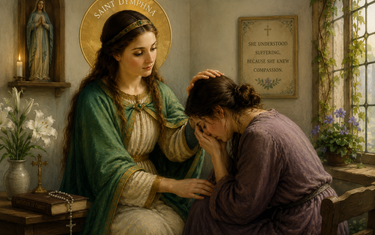
She was about fifteen years old. Her mother had just died, and her father — a chieftain who had loved his wife to the point of obsession — was unraveling under the grief. What happened next is one of the harder stories in the Catholic calendar to tell, and also one of the reasons that, fourteen centuries later, a young Irish girl named Dymphna is the saint whose name people whisper when their own minds become hard places to live.
A Short and Sorrowful Life
Dymphna was born in seventh-century Ireland, the daughter of a pagan king named Damon and a devout Christian mother. She was baptized in secret and raised in her mother's faith. By all accounts she was gentle, beautiful, and deeply devoted.
When Dymphna was still a teenager, her mother fell ill and died. Her father's grief was so consuming that, according to the traditional account, his mind broke under it. His counselors urged him to remarry, and when no suitable bride could be found, he fixed on the one woman who reminded him of his late wife: his own daughter, who had grown to resemble her mother.
Horrified, Dymphna fled. With the help of her confessor, a priest named Gerebernus, she escaped across the sea and settled in Gheel, in present-day Belgium, where she lived quietly and devoted herself to caring for the sick and the poor. But her father pursued her. When he found her and she still refused him, he killed her in a rage. She was only around fifteen years old.
Why Suffering People Claimed Her
It would have been easy for such a story to fade. Instead, something remarkable happened around her tomb in Gheel. Over the centuries, people suffering from what we would now call mental and emotional illness — those tormented in mind, those whom no one else could help — began coming there in search of peace, and many reported finding it.
Gheel grew into one of the most extraordinary places in the history of mental health care. Long before modern psychiatry, the townspeople began taking the mentally ill into their own homes as boarders, caring for them within ordinary family life rather than confining them. That tradition of compassionate community care continued in Gheel for centuries and is still studied today. It grew up, quite literally, around the memory of a girl who had herself fled a household made dangerous by a mind that had given way.
That is the heart of why people with mental illness pray to St. Dymphna. She is not a saint who looked on suffering from a safe distance. Her short life was shaped by grief, fear, trauma, and a parent whose mind had broken. When someone struggling with anxiety, depression, or any disorder of the mind turns to her, they are turning to someone who understands the territory from the inside.
What It Means to Wear Her Medal
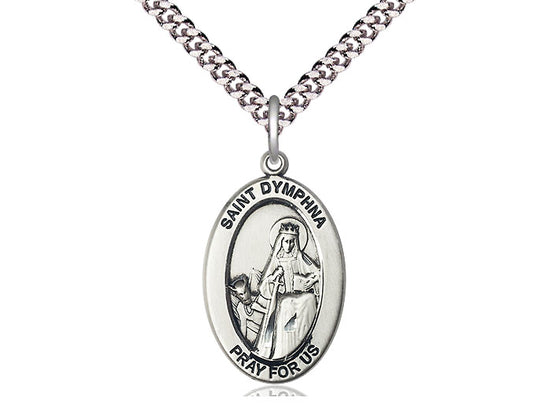
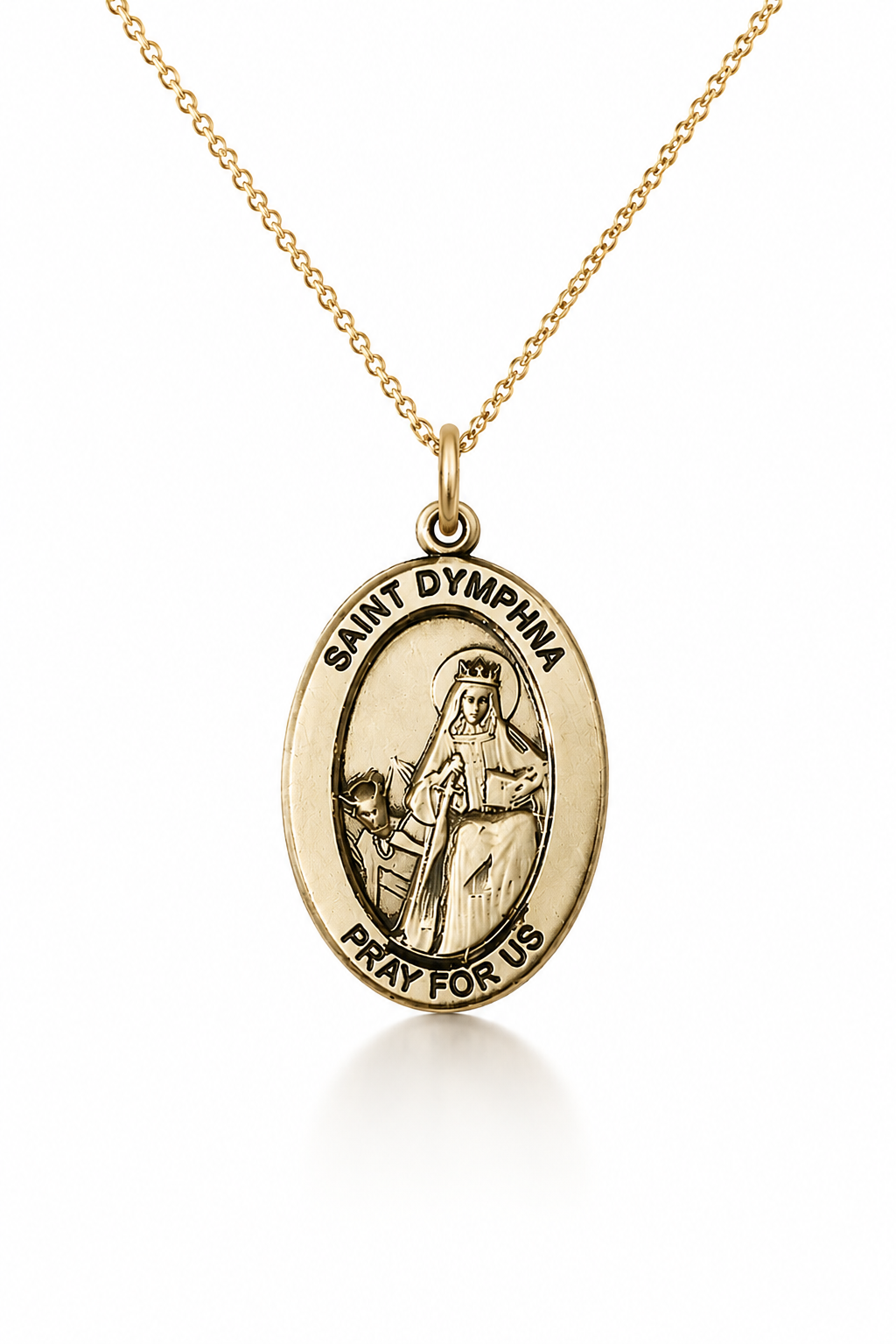
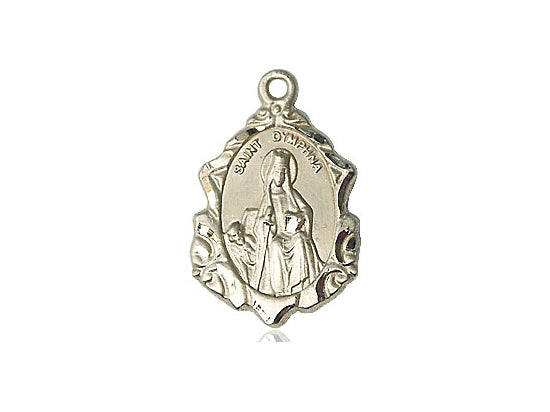
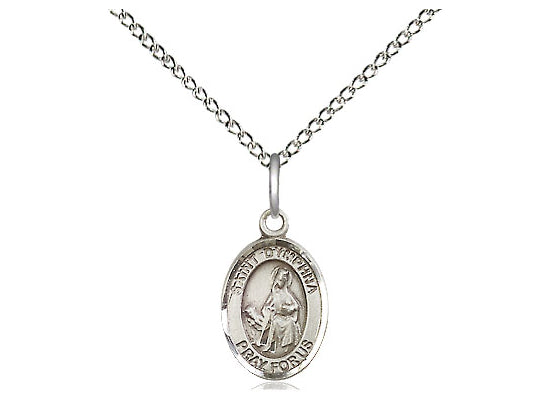
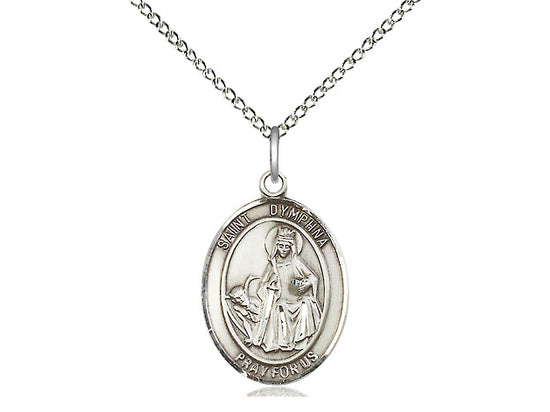
In Catholic devotion, a saint's medal is a sacramental — not a magical object, but a tangible reminder that lifts the heart toward prayer and toward the communion of saints. To wear a St. Dymphna medal is to keep close the companionship of a saint who is believed to intercede for everyone whose mind is a difficult place.
For the person who wears it, the medal becomes a small daily anchor — something to hold when anxiety rises, something to touch on the heavy mornings, a reminder that their suffering is seen and prayed for. It makes no promises about cure. What it offers is presence: the sense that one is accompanied through the struggle rather than abandoned in it.
Many people also pray a chaplet or carry a prayer card to St. Dymphna, asking through her intercession for peace of mind, patience in trial, and the strength to carry what they've been given. The traditional prayer asks that Christ restore strength, hope, and peace of mind and heart — words that have brought comfort to the distressed for generations.
For many Catholics, a St. Dymphna medal becomes a quiet daily companion during seasons of anxiety, depression, grief, or emotional suffering. It is not a cure and it does not replace professional care, but it can serve as a reminder of prayer, hope, and the intercession of a saint who has long been loved by those carrying mental and emotional burdens.

A Patron for Our Time
We are living through a moment of unprecedented anxiety and depression, and people of faith are increasingly looking for ways to bring their belief to bear on their mental health — not as a replacement for the care and treatment they need, but alongside it. St. Dymphna meets that need with rare authenticity. Her patronage is not an abstraction assigned by tradition. It is rooted in a real life touched by real anguish, and in a town that turned her memory into one of the great early experiments in caring for the human mind with dignity.
If you or someone you love is walking through that kind of darkness, St. Dymphna is a companion worth keeping close.
Explore our collection of St. Dymphna medals, handcrafted in the USA by Bliss Manufacturing and backed by a lifetime guarantee, or browse the full mental health and anxiety patron saint collection to find the right devotion. Orders over $40 ship free.
Frequently Asked Questions About St. Dymphna Medals
Who is St. Dymphna the patron saint of?
St. Dymphna is widely honored as the patron saint of anxiety, depression, mental illness, emotional suffering, and those seeking peace of mind.
Why do people wear a St. Dymphna medal?
Many Catholics wear a St. Dymphna medal as a reminder to pray for peace, courage, healing, and perseverance during anxiety, depression, grief, or emotional hardship.
Is a St. Dymphna medal a good gift?
Yes. A St. Dymphna medal can be a meaningful Catholic gift for someone struggling with anxiety, depression, or emotional suffering because it communicates prayer, support, and companionship without pressure.
Does a St. Dymphna medal replace medical care?
No. A St. Dymphna medal is a devotional reminder and sacramental. It does not replace therapy, medication, medical care, or professional mental health support.
